Friday, February 23, 2018

Blog Post #4: Codeine Cough Syrup: Medicine, Hip Hop, and Slimy Commercial Interests

Although recent trends in the hip hop community have made efforts at pushing back, addiction to cough syrup (or rather, its active ingredient, codeine) has taken the lives of a handful of artists in recent years. This should come as no surprise, as, in general, codeine is the most widely used opiate in the world (Waismann Method), and is an active ingredient in almost all prescription cough syrups (Narconon). Additionally, within the rap community specifically, it seems that a constant stream of popular songs (e.g., Codeine Crazy by Future, Mix It by Juicy J, Syrup Sippin’ Assassin by Riff Raff) find artistic inspiration (or, just as likely, increased potential revenue) in keeping with the cough syrup trend, perpetuating the detrimental and widespread recreational use of codeine within the culture.

Historically, codeine (like other drugs we now think of as dangerous, like heroin, cocaine, and methamphetamine) was first thought of as innocuous, and was commonly utilized in the treatment of chronic pain and cough suppression in children, and as a method of treatment for diabetes in the 1880s until the mid-twentieth century (Fraser). Within the hip hop community, the recreational use of codeine cough syrup was popularized in Houston by producer DJ Screw in the 1990s – after which, it spread to communities in other southern states, and eventually mainstream rap culture (Leinwand).

Today, its use as a recreational drug is further perpetuated by legal commercial products that utilize calming herbal ingredients as substitutes for codeine; and the names of these products – “Drank” (Yahoo), “Purple Stuff”, “Lean”, and “Sippin Syrup” (all popular colloquial names for, or references to, the mixture of codeine cough syrup and Sprite) (Watkins) – represent these products’ intentional marketing towards would-be codeine cough syrup users. Dr. Rob J. Peters, associate professor of behavioral sciences at the University of Texas, has criticized these commercial products’ marketing tactics, and compared it to the selling of candy cigarettes by tobacco industries in the 20th century (Bernier).

In short, the recreational use of codeine cough syrup was spurred by the medical community’s treatment of it as a harmless drug, and perpetuated by its inescapable presence in corners of hip hop culture – as well as unethical commercial products that seek to imitate the drug. Furthermore, the Drug Enforcement Administration has legitimated codeine as a cause for addiction by repositioning it from the Schedule V to the Schedule III category (American Addiction Centers), indicating, in part, its newly recognized potential for dependence (Drug Enforcement Administration). DJ Lil Randy, one of the first artists to popularize recreational use of cough syrup in Houston, has described the societal evolution of the drug as having “went from a fad to a population to a community,” (Bella). And unfortunately, only time will tell whether the seemingly countless murals and lyrical dedications recognizing artists who’ve fallen to cough syrup addiction will succeed in combatting its popularity, and culturally devaluing it as a form of popular recreation.


Works Cited

American Addiction Centers. “Cough Syrup with Codeine Abuse, Also Known as Lean
       and Purple Drank.” American Addiction Centers, American Addiction Centers,
       americanaddictioncenters.org/codeine-addiction/cough-syrup/.
Bella, Timothy. “Hip-Hop's Unlikeliest Icons: Promethazine Codeine Syrup
       Manufacturers.”Bloomberg Businessweek, Bloomberg L.P., 9 Mar. 2017,
       www.bloomberg.com/news/features/2017-03-09/hip-hop-s-unlikeliest-icons-
       promethazine-codeine-syrup-manufacturers.
Bernier, Nathan. “Public Health Expert Worried About ‘Purple Stuff’ Drink Expanding
       Distribution.” KUT, The University of Texas at Austin Moody College of
       Communication, 3 Jan. 2011, kut.org/post/public-health-expert-worried-about-
       purple-stuff-drink-expanding-distribution.
Drug Enforcement Administration. “Drug Schedules.” United States Drug Enforcement
       Administration, United States Department of Justice,
       www.dea.gov/druginfo/ds.shtml.
Fraser, Thomas R. “The Relative Value of Opium, Morphine, and Codeine in Diabetes
       Mellitus.” The British Medical Journal, 19 Jan. 1889, pp. 118–119. BMJ,
       doi:10.1136/bmj.
Leinwand, Donna. “DEA Warns of Soft Drink-Cough Syrup Mix.” USA Today, USA
       Today, 18 Oct. 2006, usatoday30.usatoday.com/news/nation/2006-10-18-
       lean_x.htm.
Narconon. “History of Codeine.” Narconon, Narconon International,
       www.narconon.org/drug-information/codeine-history.html.
Waismann Method. “Codeine General Information.” Waismann Method®, Anesthesia
       Assisted Medical Opiate Detoxification, Inc., 2 Jan. 2018,
       www.opiates.com/codeine/.
Watkins, Boyce. “Company Makes Money from Deadly Urban Trend: ‘Sipping
       Syrup.’” HuffPost Black Voices, Oath Inc., 29 Sept. 2009, archive.is/KVkz5.
Yahoo. “'Slow Your Roll' With DRANK From Innovating Beverage Group -- the
       World's First Extreme Lifestyle Relaxation Beverage.” Yahoo Finance, Yahoo! Inc.,
       10 June 2008,
       web.archive.org/web/20081202151813/http://biz.yahoo.com/pz/080610/
       144371.html.

Thursday, February 22, 2018

Coca-Cola ads 1880s & 1890s


The first ads that appeared for Coca-Cola (initially as a medicinal syrup) appeared in the 1880s."Coca-Cola Syrup and Extract" was marketed as an "Intellectual Beverage" and "Temperance Drink" that featured "valuable tonic and nerve stimulant properties." This was achieved by including extracts from kola nut and most importantly, the coca plant. As most of you know, coca leafs are what is used to make cocaine. "Have a Coke and a Smile" indeed!
In the pre-FDA and pre-Consumer Protection Agency "elixir" jargon of the late 19th century Coca-Cola syrup is presented as the ultimate energy booster, a valuable "Brain Tonic" and a sort of miracle cure for ailments such as hysteria, head-ache, neuralgia and melancholy.
The year 1906 saw the passage of the Pure Food and Drug Act and coca plant extract was removed from Coca-Cola.
I doubt that the early marketers of Coca-Cola syrup could have foreseen the many twists and turns that the refined products of the coca plant; chiefly street cocaine would take and the multi-billion dollar international drug apparatus that it would prop up
In 1886 it all looked so innocent. I was reminded of the outstanding Cinemax drama that Steven Soderbergh directed "The Knick." The shows stars Clive Owen as a turn of the 20th century surgeon in New York City. In addition to exploring themes and issues like Eugenics and early surgical techniques the show features the ongoing drug use (in the form of injectable cocaine) of Owen's character Dr. John W. Thackery. Thackery views cocaine as the ultimate performance enhancing drug and there are some graphic, memorable scenes of him injecting cocaine just before going into the operating theater.

Blog #4 Gambling Addiction

I have always been shocked at the idea of gambling addiction. The few times that I have been to a casino it amazes me to walk through and see the people who are able to sit at a machine and bet 5 dollars at a time and hit the game as fast as they can. People work sooo hard for their money so it blows my mind how much they are willing to waste for the slight chance they might win. This billboard I think it so true, the chances of getting hit by lighting has much great odds then winning a top prize on a poker machine. I feel like we all know that the odds of winning a lot of money while gambling has such a slim chance but a lot of people get hooked on the fact that there is a slight chance of it happening. I think this billboard is just trying to get across the fact that there is such a slight chance at winning a lot of money. I think the true problem is when someone wins a lot of money while gambling.. that is when an addiction can start. This last picture represents this issue. Once winning big, people just want to continue because they know that it could happen to them again. I think this is all very COMMON sense but I think it can be very easy to forget once you win money while gambling.

Wednesday, February 21, 2018

Blog #4: Smoking Addiction

So I’m writing this week’s blog particularly early (at least by my standard) because I’ll be unable to type the rest of the week after my surgery tomorrow. The truth is I’m amputating my right arm because I’ve secretly been an apotemnophiliac all this time. KIDDING. Please don’t take me seriously, also don’t be offended by my truly harmless joke. But I am seriously getting surgery tomorrow, removing a pretty big cyst in my right wrist that will prevent me from hand use for a little while. So anyways, here it goes: my take on smoking (nicotine and tobacco) addiction and how the portrayal of this act has changed significantly over time.

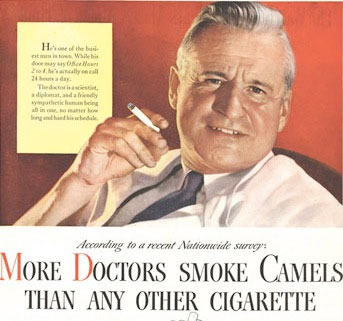
As Robin so selfishly (kidding, kind of) took one of my favorite TV shows (Breaking Bad) to analyze Heroin addiction, I decided to turn to one of my favorite movies instead. It might seem strange for an eleven year old to be addicted -- maybe I should be writing about myself instead -- to the movie Titanic, but eleven years later it’s still my favorite movie and I can pretty much quote the whole thing. Back to the point, the actual sinking of the Titanic took place in 1912, a time in which smoking cigarettes was as commonplace as eating. I don’t have the time tonight to watch the movie to report exact numbers, but I know how often cigarette smoking occurred throughout the three hour movie. Regardless of the time of day, the class of the passengers, or the setting, you could catch pretty much anyone smoking on that doomed ship. And had the ship not sank, I wonder how many of those passengers would have eventually died from lung cancer. I know it’s just a portrayal, but this time period (early twentieth century) was the prime time for the tobacco industry / prevalence of cigarette smoking. Back then, it was encouraged to smoke, even by doctors and dentists.


There was little to no concern about cigarette smoking until the mid-twentieth century. The prevalence of lung cancer and other complications among cigarette smokers became too large to ignore around 1950’s, and eventually a decline of cigarette use was seen beginning in the 1960’s. What fascinates me the most about cigarette smoking and this obvious addiction among the general population is how it was viewed and handled, and how that has changed so significantly in a (relatively) short period of time. Back then, I can hardly believe anyone would’ve viewed it as an addiction (like caffeine, or our cell phones -- yes I’m referencing today’s debate), as nearly everyone did it, and it wasn’t “bad” for you. Just imagine if every addiction was treated like smoking had, with such a quick decline of use in a short period of time. I’m interested to see how time progresses, and if things that we view as “harmless addictions” become suddenly extremely detrimental to our health. Now in 2018, I don’t think I can go a day without seeing some sort of “quit smoking” commercial on TV. It’s fascinating to see how far we’ve come in less than a century.

https://www.ncbi.nlm.nih.gov/pmc/articles/PMC3894634/

Blog Post #3: Descartes v. Eyewitness Testimony

As anyone who’s seen a re-run of Law and Order or any similar TV crime show can attest, eyewitness testimony often seems to play an important role in the conviction of alleged criminals. But what if eyewitness testimony is inherently less accurate than we think? Rather shockingly, this is the case according to researchers. As Hal Arkowitz and Scott O. Lilienfeld write in an article of the Scientific American, “Many people believe that human memory works like a video recorder: the mind records events and then, on cue, plays back an exact replica of them. On the contrary, psychologists have found that memories are reconstructed rather than played back each time we recall them.” People are confident that their memories represent actual events closely – but, in reality, memories can be unknowingly influenced by a number of factors. Moreover, it’s been found that even highly confident eyewitnesses are usually only marginally more accurate, at best, when compared to less confident eyewitnesses (Arkowitz and Lilienfeld).

This acts as a representative instance of Descartes’ dualism. People place a lot of faith in their mental faculties (in this case, their memory), despite the fact that material reality entails limitations to the mind’s capabilities. In fact, the factors that can play a role in influencing eyewitnesses’ memories include: how the memory was asked to be recalled, the level of stress the witness was under during the crime, and racial differences between the witness and suspect (Arkowitz and Lilienfeld). These factors represent a limitation of the body – in that the physical brain (i.e. not the mind, or consciousness) can be easily manipulated by external forces because of the way that it functions – specifically reconstructing, and not replaying, events. That people (both witnesses and juries) seemingly, by intuition, accept the mind’s beliefs (i.e. memories) as more valid than the potential for these external factors to influence those memories, as well as more valid than the way that the physical brain operates – despite the scientific studies and personal anecdotal evidence to the contrary (can’t you remember a time you swore something happened a specific way, only to learn that you were wrong?) – demonstrates the resonating effect of Descartes’ philosophy in our society, which places mind over body. Additionally, this is ironic, however, since Descartes himself was wary of empirical evidence (e.g., eyewitness testimony) due to the possibility that his conceptual “evil demon” might manipulate the individual into believing certain things to be true, and he thus preferred to rely instead on rationalist evidence, or absolute facts. Thus, even though Descartes would likely rather we treat eyewitness testimony with suspicion – because we view memories as being recorded by our infallible minds, and because absolute facts are hard to come by in a legal context, courts of law often rely, at least partly, on eyewitness testimony.


In this sense, our society might do better (seeing as how inaccurate eyewitness accounts have contributed to over 75% of wrongful convictions in the U.S.) (Reiss) to question the Descartes-influenced, intuitive inclination to which we seem to be subject that leads us to believe so steadfastly in the reliability of our memories. Or rather, we might do better to approach Cartesian thinking in a more nuanced way, being as wary as Descartes would be in not so readily accepting empirical evidence, such as eyewitness testimony.


Works Cited

Arkowitz, Hal, and Scott O. Lilienfeld. “Why Science Tells Us Not to Rely on
       Eyewitness Accounts.”Scientific American, Scientific American, a Division of
       Nature America, Inc., 1 Jan. 2010, www.scientificamerican.com/article/do-the-eyes-
       have-it/.
Reiss, Ruth. “Wrongfully Convicted by an Inaccurate Eyewitness.” ABC News, ABC
       News Network, 25 Mar. 2008,
       abcnews.go.com/Primetime/WhatWouldYouDo/story?id=4521253.

Tuesday, February 20, 2018

Blog Posting #4 (Due Saturday 2/24 11:59 PM): Representing 'Addiction'

Representing / 'Making up' 'addictions' (and anything else)

I (Robin) have never shot up heroin.  I don't know anybody who's a heroin addict (Boy Scout / sheltered life).  But I've watched The wire many, many times (IMHO, the best television ever made).  I watched (binge-watched) Breaking bad. I worked in a state mental hospital briefly after Big Steel went down in Pittsburgh, and I got laid off; we 'treated' addicts in withdrawal (they lost their 'civil rights'), and our training materials explained addiction and treatment to us.  I read in the Pittsburgh press that 'Negroes' (that's what we said back then) had grown vast tracts of 'reefer' along the railroad tracks, and were dangerous addicts. They got busted.  Breaking bad showed Jane teaching Jesse how to cook H, and shoot up (spoons, lighters, cotton balls...).  Almost lovingly, she turns him on his right side, explaining that then he won't aspirate vomit when he's out, and die. Then Walter comes in, finds the sleeping addicts, and causes Jane to roll on her back.  She aspirates vomit and dies in an absolutely horrifying scene — as ugly a picture of addiction as imaginable. Walter leaves her to die. All opiate drug information sites mention 'nausea and vomiting' as a possible side effect. On the other hand, when Vincent Vega (in Pulp fiction) shoots up, director Quentin Tarantino lovingly films his withdrawing the venous blood into the syringe like it's impressionistic art. And as Vincent drives off, high, he has a happy, calm grin on his face. Quentin makes addiction look—well—sort of good.
Pens in the shape of syringes,
 sold at the Family Dollar store.   


Did I get everything I know about addiction from representations (films, stories, ads, TV, novels, drug-ed. materials, posters, public-health pamphlets...)?  Do we learn that shooting up is cool at the Family Dollar Store? Probably. Where else would we get it?  Where did we get what we know about anything?


➡ In this project, we get to explore how 'addiction' (any kind) is 'constructed' or 'made up' through representations. ⬅

So...  You might start with either:
  • An addiction that interests you, and go see how it's 'represented'
  • An intriguing, confusing, disturbing or otherwise interesting representation—a film, a video, a website, an anti-gambling poster, a discussion board, or whatever, that you want to figure out.
Your job is to show us how (this is an 'explaining how' project) the common-sense, everybody-knows, received-wisdom, public meaning of a condition is made up through the ways it's represented in words, images, sounds and so on. 

All my examples above are current and from popular culture.  But think historically and medical / professionally as well.  Here (and in your Background Reports) use any specialized knowledge you have. Heroine, for example, was made as a 'cure' for morphine addiction; it was the 'hero drug' (hence the name).  Yes, it cured morphine addiction (by creating heroine addiction), and Bayer (of Aspirin fame) marketed it over the counter as a cough suppressant, a way to make babies sleep.  

We noted how Hazelden Betty Ford 'medicalized' alcoholism as an addiction with its source in genes and brain abnormalities. This, folks, is our old friend 'legitimation' at work.  And once 'medicalized' into a condition, AA's concept is different. 

If we remember, as Brendan argued, that 'addiction' as we know it is a recent and specific invention, then it makes sense to figure out how it came about, how it took the shape it has, who contributed (money and labor) to making it up, who profits by the way it's known (and who suffers).  In short: it's a hybrid and we're unpacking its parts.

Final Blog

I am profoundly interested in the Cartesian split. I knew what it was pretty vaguely before this course, but did not fully understand it at ...